
scroll
Dear Colleague,
Welcome to Issue 2 of our newsletter, West Midlands Future Motion. Since our launch on 9th July, we have been listening closely to businesses, universities and public-sector partners across the region. In this issue, we sit down with Natalie Dowsett, the Cluster’s Interim Director, to hear about her career, what she took from the launch event and what she wants the Cluster to focus on first.
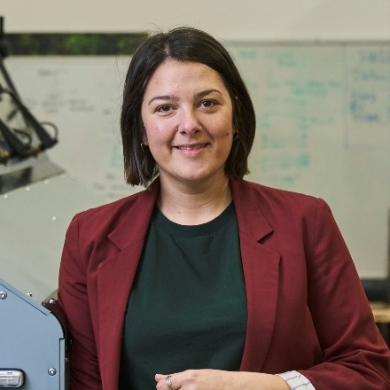
Meet our Interim Cluster Director: An Interview with Natalie Dowsett
You began your career as an automotive engineer at JLR. What were you working on, and what did that experience teach you?
“I joined JLR as a vehicle package engineer focused on Jaguar cars before moving into product strategy and, later, communications. That gave me the opportunity to see the automotive industry from several different perspectives: how vehicles are engineered, how product decisions are made and how you bring people with you. Engineering taught me to be curious, to understand how the different parts of a system interact and to work through problems methodically, and my ongoing experience has taught me that being able to bring people along on the journey with you is essential.”
You’ve spent much of your career immersed in the West Midlands automotive scene – what’s your own personal connection to the region?
“I’m originally from Stockport, a shopkeeper’s daughter, and I’ve been settled in the West Midlands for the past 17 years with my husband. Life at home is busy: we have two children at primary school and a dog, so there’s rarely a quiet moment!”
How do you spend your time outside of work, and what draws you to a project like the Cluster?
“In my spare time, I like to be creative, and I recently stepped right out of my comfort zone to perform tap in my first ever dance show! But like most people, I struggle to apply myself to something I don’t feel passionate about, so that’s what I look for in the work I do. It’s why I’m so pleased to be supporting an ecosystem that I am a huge advocate for.”
What was it like moving from a large OEM into building OX Delivers?
“It was a huge shift. At JLR, I was part of a very established organisation with expertise, processes and resources in abundance! At OX, we were starting with an ambitious idea and had to build almost everything from scratch. The experience at OX was very much a career highlight but it was tough, and ultimately it demonstrated how difficult it is to turn good technology or ideas into a viable business. Start-ups need far more than funding: they need access to expertise, facilities, customers, supply chains and people who can help them navigate the system.”
Following the Cluster’s launch event, what early themes did you hear from businesses about the opportunities and gaps in the region?
“What was great about the event was the appetite to collaborate. The West Midlands is already rich in expertise, capability and ambition. The challenge is that the existing ecosystem can be difficult to navigate. My key takeaways were that businesses want clearer routes to the right people, facilities, funding and opportunities. They also want engagement to lead to something tangible rather than simply another conversation or event.”
Having worked inside a major manufacturer and led a growing start-up, what does the West Midlands automotive ecosystem do well, and where could it be more effective?
“The region has an exceptional concentration of automotive knowledge. We have major manufacturers, a deep supply chain, innovative smaller companies, world-class universities and research organisations, and people with decades of practical experience. The opportunity is not to create another layer. It is to help the existing ecosystem work more effectively by making connections clearer, surfacing shared priorities and helping collaboration move towards action.”
Based on your experience as a founder, what friction would you most like to remove for businesses seeking funding, R&D support or talent?
“I would like to make the journey through the support landscape clearer and more joined-up. Founders and growing businesses are often expected to understand a complex mix of funding programmes, research capabilities, skills initiatives and institutions while also running their companies and raising investment. I would also like to see support designed around the whole commercialisation journey. Funding an R&D project is valuable, but businesses also need routes to customers, manufacturing capability, investment and the talent to turn that project into a sustainable business.”
As someone who has been the small company trying to gain the attention of large organisations, what does a useful connection between an OEM, supplier or start-up actually look like?
“A useful connection begins with a clear purpose. Smaller companies need to understand the problem a larger organisation is trying to solve, who owns that problem and what a realistic route to working together looks like. An introduction alone is rarely enough. The Cluster could support this by creating more focused connections around real needs and opportunities, helping businesses reach the right decision-makers and setting clear expectations about what happens next.”
What will you prioritise first for the Cluster, and what can wait until a later stage?
“My immediate priority is to build a clear understanding of where the Cluster can add the most value. That means listening to industry, academia and government about their pain points and mapping what already exists to ensure there is no duplication. The first phase is about relationships and evidence, to enable us to deliver value for industry at a time it is facing, and will continue to face, significant headwinds. That foundation will allow us to make deliberate choices about where the Cluster should act directly, where it should convene others and where it should simply connect people to existing support.”
What would success look like for the Cluster over the next year and in the longer term?
“Over the next year, success would mean that the Cluster has earned the confidence of the key stakeholders within the ecosystem by delivering practical outcomes. Underpinning that will be a clear purpose, an evidence-based future action plan and meaningful participation from businesses, universities and public-sector partners. Ultimately, its success should not be measured by how visible or busy the Cluster itself becomes. It should be measured by whether the organisations and people within the ecosystem are better connected and more able to succeed.”
Help shape our priorities
We are still in the listening phase Natalie describes above. If you have a view on where the Cluster could add the most value, we would like to hear it.
Or email hello@wmautocluster.co.uk — or simply reply to this newsletter.
DRIVE35 Innovation Fund: Collaborate 3
Deadline: 16 September 2026
Upcoming events
- EVCharge Live UK & Solar & Storage Live UK – 22–24 September, NEC Birmingham. EV charging infrastructure and solar/storage co-located event. - https://www.thenec.co.uk/events/evcharge-live-uk-2026/
- Birmingham Tech Week – 19–23 October. Events taking place throughout the week around the city of Birmingham, celebrating technology and innovation. - https://birminghamtechweek.com/
- West Midlands Growth Summit – 21 October 2026 (part of Birmingham Tech Week). Showcasing the region’s strengths, business support services and investment opportunities.
Thank you for your support
Thank you again for your support as we build this community together.
Best wishes,
The West Midlands Automotive and Battery Cluster team
